How To Protect Car Interior From Sun Damage
A practical step-by-step guide to How to protect car interior from sun damage, including preparation, instructions, common issues, tips, and next steps.

How To Protect Car Interior From Sun Damage
Sunlight can quietly age your car's interior, cracking the dashboard, fading the seats, and making plastics brittle. With a few protective habits and simple products, you can block most of that damage without much effort.
Fast Answer
- Park in shade or use a windshield sunshade every time you leave the car, because blocking direct sunlight is the single most effective way to prevent interior damage.
- Apply a UV-protective conditioner to vinyl, plastic, and leather surfaces at least once a month to keep them from drying out and cracking.
Before You Start
- Gather a windshield sunshade that fits your car's glass size, plus a soft microfiber cloth and a bottle of UV-protective interior conditioner.
- Clean all interior surfaces first with a gentle cleaner so dust and grime do not get sealed under the protective product you apply later.
- Check your parking options at home and work; a covered spot or a spot under a tree can reduce sun exposure more than any product.
- Read the labels on any interior care product to confirm it is safe for the materials in your car, such as leather, vinyl, or fabric.
Step-by-Step Instructions
Park strategically for shade
The easiest way to protect your interior is to avoid direct sun in the first place. When you park, look for a covered garage, a carport, or a spot under a tree. If you must park in the open, choose a spot where the sun will hit the rear or side of the car instead of the dashboard, because the dashboard and front seats take the hardest hit. In the northern hemisphere, parking with your back to the south can reduce windshield exposure during the middle of the day. Check your parking spot at different times of day to see how the shadows move. This matters because shade lowers the surface temperature inside the car, and lower temperatures slow the chemical breakdown that makes plastics fade and crack.
Use a windshield sunshade
A sunshade is a reflective panel that you place inside the windshield when you park. Open it fully, press it against the glass, and fold down your visors to hold it in place. The reflective side should face outward toward the glass. This simple barrier blocks the sun's rays from reaching your dashboard, steering wheel, and front seats. Measure your windshield before buying a shade so it covers as much glass as possible without gaps. When you return, fold it and store it behind a seat or in a door pocket. Check that the shade fits snugly; a loose shade lets light leak around the edges. This check matters because even a small gap allows concentrated sunlight to hit one spot and cause uneven fading over time.
Apply UV protection to surfaces
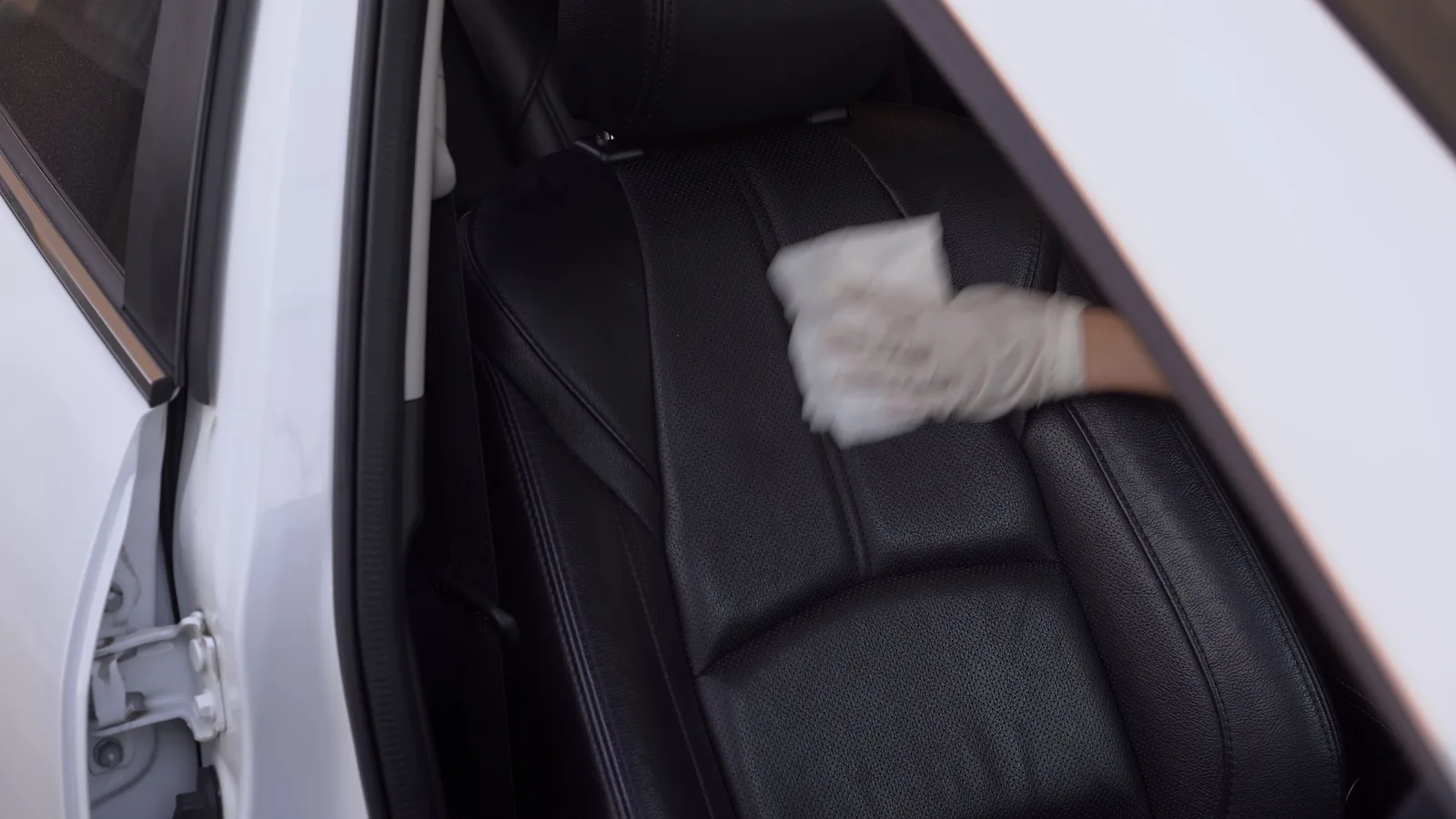
After cleaning, apply a UV-protective conditioner to vinyl, plastic, rubber, and leather surfaces. Put a small amount on a microfiber cloth, not directly on the surface, and wipe it evenly across the dashboard, door panels, and seats. Let it soak in for the time stated on the label, then buff off any excess with a clean dry cloth. Do not use a greasy or shiny product on the steering wheel or pedals. Check your work by touching the surface after it dries; it should feel dry to the touch, not slick. This check matters because a slick surface can be dangerous while driving, and an uneven coat leaves some areas exposed to UV rays that cause cracking and fading.
Cover seats and steering wheel
Seat covers and a steering wheel cover add a physical layer between the sun and your original upholstery. Choose light-colored covers, because light colors reflect more heat than dark ones. Install seat covers so they fit tightly and do not slide when you get in and out. For the steering wheel, a cover can prevent the rim from becoming hot and brittle. Check that any cover you add does not block side airbags or interfere with seat controls. This check matters because safety features must work without obstruction, and a loose cover can slip under your hands or feet while you drive. When you park, you can also drape a light towel over the steering wheel and driver's seat for quick, temporary shade.
Tint or shield your windows
Window tint or clear UV-blocking film reduces the amount of sunlight that enters your car through the side and rear glass. Professional installers can apply film that blocks a large share of UV rays without making the windows too dark for safe driving at night. Check your local rules about how dark tint can be on each window before you choose a film, because rules vary by place and by window position. After installation, wait for the film to cure as long as the installer recommends before rolling down the windows. This check matters because rolling them down too soon can peel the film and leave an edge that lets light through. Even a light film can lower the interior temperature and protect rear seats and trim.
Maintain a regular care routine
Set a simple schedule: clean and condition the interior once a month, and do a deeper clean each season. During the monthly care, wipe down the dashboard, console, and door panels with a damp microfiber cloth, then apply conditioner where needed. Vacuum carpets and seats to remove dust that can hold heat and grit. Check for early signs of damage such as fading, small cracks, or a sticky residue on plastic. If you find any, treat that area right away. This check matters because catching damage early lets you slow it down before it becomes permanent. Also, keep a sunshade in the car at all times so you never skip using it out of convenience. A routine turns protection into a habit instead of a project.
Quick Reference
| Situation | Action | Why it helps |
|---|---|---|
| You must park in direct sun for several hours. | Place a reflective sunshade in the windshield, fold down the visors, and crack the windows slightly for airflow if it is safe to do so. | Blocking the windshield stops the strongest rays from reaching the dashboard, and slight airflow helps lower the peak temperature inside the cabin. |
| You notice the dashboard looks faded or feels dry. | Clean the area with a gentle cleaner, then apply a UV-protective conditioner made for the material you have, and buff off any excess. | Conditioner adds a protective layer that slows moisture loss, which is the main cause of cracking and fading in vinyl and plastic. |
| You often carry passengers in the back seat. | Use a light-colored seat cover or a folded towel on the rear bench when parked, and consider clear UV-blocking film on the rear glass. | Rear seats can fade just as much as front seats, and a light cover reflects heat while film reduces the UV rays that pass through the glass. |
Common Issues
- Dashboard develops small cracks or a sticky, shiny film.: Clean the surface with a mild cleaner to remove the sticky residue, then apply a non-greasy UV-protective conditioner and keep using a sunshade every time you park. If cracks are deep, a professional interior repair may be needed.
- Leather seats feel stiff or show light-colored wear lines.: Clean the leather with a pH-balanced leather cleaner, then apply a leather conditioner and let it absorb. Repeat monthly, and keep the seats out of direct sun with a sunshade and light-colored covers when parked.
- Steering wheel becomes too hot to touch or feels slimy after using a dressing.: Wipe the steering wheel with a clean damp cloth to remove any slick product, then use only a dry or very lightly damp cloth on it in the future. Do not apply shiny dressings to the wheel, because they reduce grip and can be unsafe.
Advanced Tips
- Use a light-colored dashboard cover that is designed to lie flat and not block airbag deployment; check the owner's manual for airbag locations before installing any cover.
- On very hot days, park with the rear of the car facing the sun if you cannot find shade, because the rear glass often has less direct exposure to the dashboard.
- Keep a small hygrometer in the car to monitor cabin humidity; very low humidity dries out leather and plastic faster, so you can adjust your conditioning schedule accordingly.
Final Checklist
- Confirm you have a sunshade that fits your windshield and that you use it every time you park in the sun.
- Check that all interior surfaces are clean and have a fresh coat of the correct UV-protective product for their material.
- Verify that any seat covers or steering wheel covers are installed tightly and do not block airbags or controls.
- Review your monthly routine and set a reminder to clean, condition, and inspect the interior for early signs of sun damage.
FAQ
How often should I apply UV protection to my car's interior?
Apply a UV-protective conditioner at least once a month for surfaces that get direct sun, such as the dashboard and front seats. In very sunny places or if the car sits outside all day, you may need to apply it every two to three weeks. Always clean the surface first so the product bonds to the material instead of sealing in dirt.
Will window tint really help protect my interior?
Yes, window tint or clear UV-blocking film reduces the amount of UV radiation that enters through the glass, which slows fading and cracking. The exact level of protection depends on the film you choose and how it is installed. Check your local rules about allowable tint darkness for each window before you buy, because rules differ by location and window position.
What can I do if my dashboard is already cracked?
If the damage is light, cleaning and conditioning may slow it down and improve the look. For deeper cracks, a professional interior repair specialist can fill and refinish the area. To prevent new cracks, keep using a sunshade and avoid parking in direct sun whenever possible, because once plastic dries out it becomes more likely to crack again.