How To Choose A Seasonal Car Care Checklist Before Winter
A practical step-by-step guide to how to choose a seasonal car-care checklist before winter, including preparation, instructions, common issues, tips, and next steps.
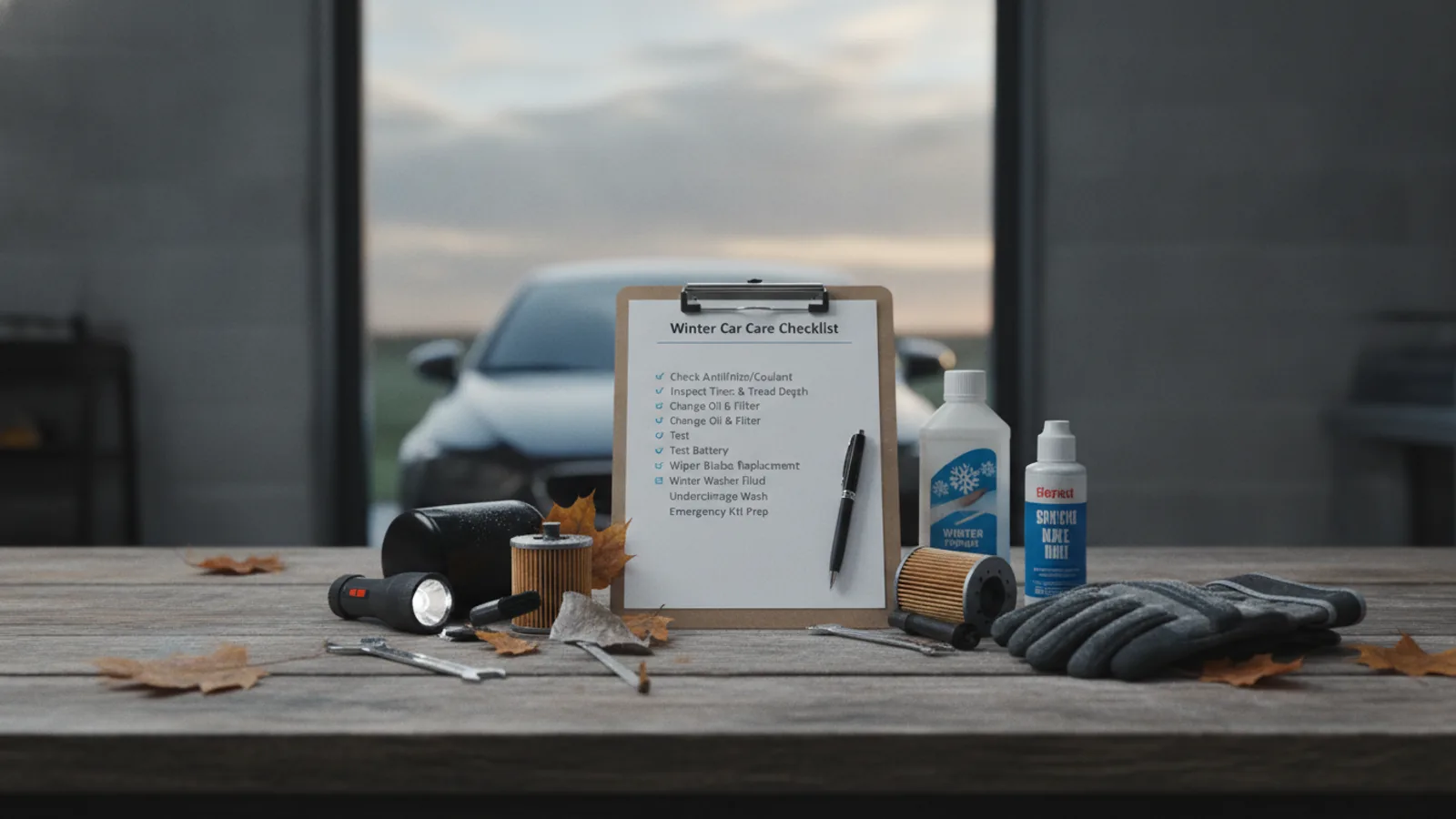
How To Choose A Seasonal Car Care Checklist Before Winter
Winter weather can be harsh on your vehicle, so creating a seasonal car-care checklist before the first freeze is essential for safety, reliability, and longevity. This guide walks you through preparing your car for cold temperatures, snow, and ice, covering everything from fluids and tires to emergency supplies and battery health. By following these steps, you'll reduce the risk of breakdowns, prevent costly repairs, and ensure you're ready for whatever winter brings.
Fast Answer
- Check and replace winter windshield wiper fluid rated to -30°F, and install new wiper blades designed for snow and ice.
- Test your battery's cold-cranking amps (CCA) and clean any corrosion from terminals to ensure reliable winter starts.
Before You Start
- Gather a flashlight, ice scraper, snow brush, and a small shovel to keep in your trunk at all times.
- Review your owner's manual for recommended winter oil viscosity and service intervals specific to cold weather.
- Inspect all exterior lights, including headlights, brake lights, turn signals, and hazards, replacing any burned-out bulbs.
- Check your tire pressure, including the spare, as cold air reduces pressure; consult the sticker on the driver's doorjamb for correct PSI.
Step-by-Step Instructions
Check Your Battery's Health and Connections
Begin your winter preparation by focusing on the battery, since cold weather reduces cranking power. Inspect the battery case for cracks or leaks, and look at the terminals for white or bluish corrosion. If you see buildup, disconnect the cables (negative first) and clean the terminals with a wire brush and a solution of baking soda and water. Then, test the battery's voltage with a multimeter; a fully charged battery should read around 12.6 volts. For a more thorough assessment, take your vehicle to a shop for a load test to confirm its ability to deliver cold-cranking amps. If the battery is more than three years old, consider replacing it proactively. Loose or corroded connections can prevent starting even a healthy battery. After cleaning, tighten the cables securely to ensure a solid connection. This step matters because a weak battery is a leading cause of winter breakdowns, and prevention is far easier than dealing with a no-start in freezing temperatures.
Inspect and Swap to Winter-Grade Fluids
Next, pay attention to the fluids that protect your engine and keep you safe in winter. Check the engine oil level and viscosity; if the owner's manual allows, switch to a thinner oil (like 5W-30 or 0W-20) that flows better in cold starts. For the windshield washer reservoir, empty it and refill with a winter blend rated to at least -30 degrees Fahrenheit, because summer fluid freezes on the glass. Also check the coolant (antifreeze) level and mixture; it should be a 50/50 mix of coolant and water to lower the freezing point. Use a hydrometer or test strips from an auto parts store to verify the mixture's protection level. Additionally, top off brake fluid and power steering fluid, ensuring they are at the proper marks, but never mix types. These fluids are essential for safe braking and steering on icy roads. Regularly checking and changing fluids prevents severe engine damage and keeps your visibility clear. Finally, always dispose of used fluids properly, so do not pour them down drains.
Examine Tires for Tread and Pressure
Your tires are your only contact with the road, so winter demands extra attention. First, check the tire pressure when tires are cold, using the psi recommended on the driver's doorjamb, and add air if needed; pressure drops about 1 psi for every 10 degrees Fahrenheit drop in temperature. Next, inspect the tread depth using a penny: place a penny in the groove with Lincoln's head upside down; if the top of his head is visible, your tread is too shallow. For winter tires, ensure your tread depth is at least 6/32 of an inch, but ideally more. Also, look for any cracks, bulges, or embedded objects on the tire sides and tread. If you live in an area with heavy snow and ice, consider switching to dedicated winter tires, which have a special rubber compound that stays flexible in cold temperatures. Even all-season tires can become hard and lose traction in freezing temps. Proper tread and pressure improve braking, cornering, and hydroplaning resistance. Remember to check the spare tire's pressure as well, because a flat spare on a snowy road is no comfort.
Test the Heater, Defroster, and Electrical Systems
Now, focus on the systems that keep you and your windshield clear and comfortable. Turn on the vehicle and set the heater to high; wait to see if warm air blows promptly. If not, the thermostat, coolant level, or heater core may be faulty. Similarly, activate the front defroster and rear defroster to confirm they clear condensation quickly. Check the alternator by measuring voltage at the battery terminals with the engine running; it should read between 13.8 and 14.4 volts. This test ensures the alternator is charging the battery, which is crucial for running lights, wipers, and heated seats in winter. Also, inspect the wiper blades for cracks or stiffness; if they streak, replace them with winter blades that have a rubber coating to prevent ice buildup. Finally, verify that your fog lights and emergency flashers work—these are vital in snowstorms. A reliable defroster and heater are necessary for safety, and a failing alternator can leave you stranded. Paying attention to these components now saves you from uncomfortable and dangerous situations on the road.
Build a Winter Emergency Kit
Assemble a comprehensive emergency kit that stays in your vehicle all winter, because a sudden snowstorm or breakdown can leave you stranded. Start with items to keep you warm: an extra blanket, hand warmers, a hat, and gloves. For visibility and signal, include a flashlight with extra batteries, a brightly colored cloth to tie to the antenna, and road flares or reflective triangles. For traction, pack a bag of sand or kitty litter, a small shovel, and a traction mat set. For minor repairs, include jumper cables, a basic tool kit, and a multi-purpose knife. Also, pack a first-aid kit, non-perishable snacks like energy bars, and a large bottle of water—though if the water freezes, you can melt snow instead. Finally, keep a phone charger and a portable power bank for emergency calls. This kit is your lifeline if you're stuck in a ditch or waiting for help. Having it ready in advance means you won't risk a dangerous walk for help. Customize the kit to your climate and travel distances, and check perishables regularly.
Inspect Belts, Hoses, and Cooling System
Finally, examine under the hood for signs of wear that cold weather will worsen. Look at the serpentine belt and any accessory belts for cracks, fraying, or glazing; a broken belt can disable your alternator, water pump, or power steering. Press on the middle of each belt to check tension—it should deflect about half an inch. Then, squeeze the radiator hoses and heater hoses; they should feel firm but slightly pliable, not hard or brittle. If you see cracks, soft spots, or bulges, replace them now. Also, check the radiator cap for a tight seal and pressure release; a worn cap can cause coolant loss and overheating later. Listen for any squealing sounds when you start the engine or turn on the heater; this may indicate a loose belt or a failing bearing. Cold temperatures make rubber brittle, so these components are more likely to fail when you need them most. Replacing a cheap hose or belt now prevents a breakdown on a frozen road. Finally, ensure your cooling system is flushed and filled with fresh coolant according to the owner's manual.
Quick Reference
| Situation | Action | Why it helps |
|---|---|---|
| Windshield wipers leave streaks and smear snow during freezing rain. | Replace the wiper blades with winter-grade blades that have a rubber boot covering the metal frame to prevent ice buildup. | Winter blades maintain even pressure against the curved glass and resist freezing, ensuring clear visibility in freezing rain. |
| Car battery is more than three years old and you're planning a long winter road trip. | Have the battery load-tested by a professional; if it fails, replace it and clean the terminals before the trip. | Cold temperatures reduce battery capacity, so testing prevents unexpected failure far from home or on deserted roads. |
| Snow is forecast and you have to drive on unplowed residential streets. | Check your tire tread depth with a penny and ensure it's at least 6/32 of an inch; if less, consider winter tires. | Deeper tread channels snow and slush away, providing better traction and braking on unplowed streets, and winter tires offer superior grip. |
Common Issues
- Frozen door locks or door seals sticking in subzero temperatures.: Spray a small amount of graphite powder into the keyhole and apply a thin layer of silicone lubricant to the rubber seals around doors. If locks freeze on a trip, use a commercial de-icer or heat the key with a lighter (carefully) before inserting.
- Washer fluid freezes on the windshield, leaving residue that impairs visibility.: Park in a heated garage if possible, and turn on the defroster to warm the windshield. Switch to a winter-grade washer fluid with a lower freezing point, and do not mix with summer fluid—empty the reservoir first.
- Battery fails to start the car on a frigid morning even though it seemed fine before.: If the battery is over three years old, replace it preemptively before winter. If it fails suddenly, jump-start the car and drive to a service center for a load test; then clean any corrosion and ensure the alternator is charging correctly.
Advanced Tips
- Install a battery blanket (warmers) in extreme cold to maintain cranking power and extend battery life, but ensure it's approved for your battery type.
- Apply a thin coat of petroleum jelly to battery terminals after cleaning to prevent corrosion, but avoid over-applying to keep it from attracting dirt.
- Use a fuel additive designed to prevent fuel lines from gelling if temperatures drop below -10 degrees Fahrenheit, and keep your gas tank above half full to avoid condensation freezing in the fuel line.
Final Checklist
- Tested the battery voltage and cleaned any corrosion from terminals, with at least 12.6 volts when engine off.
- Replaced washer fluid with winter blend and installed new winter wiper blades that are free of streaks.
- Checked tire pressure including spare, and verified tread depth with a penny test; added air as needed.
- Assembled an emergency kit with blanket, flashlight, jumper cables, and sand, and placed it securely in the trunk.
FAQ
Should I let my car idle to warm up in the morning?
Modern vehicles do not require long idling; 30 to 60 seconds is sufficient to get fluids moving, and driving gently warms the engine faster. However, you should clear all snow and ice from the windows before moving, and remember to never idle in an enclosed space.
Are winter tires necessary if I have all-wheel drive?
All-wheel drive helps you accelerate, but it does not improve braking or cornering. Winter tires provide better traction in cold temperatures due to a specialized rubber compound and tread design, so they are highly recommended, especially in areas with significant snow and ice.
How often should I check my tire pressure in winter?
Check tire pressure at least once a month and before long trips, because pressure decreases by about 1 psi for every 10°F drop in temperature. Use a reliable gauge and inflate to the recommended psi on the door sticker, not the maximum on the sidewall.